
Podcast · Ep52
Why Do Some Businesses Fail to Hit Their Growth Goals?
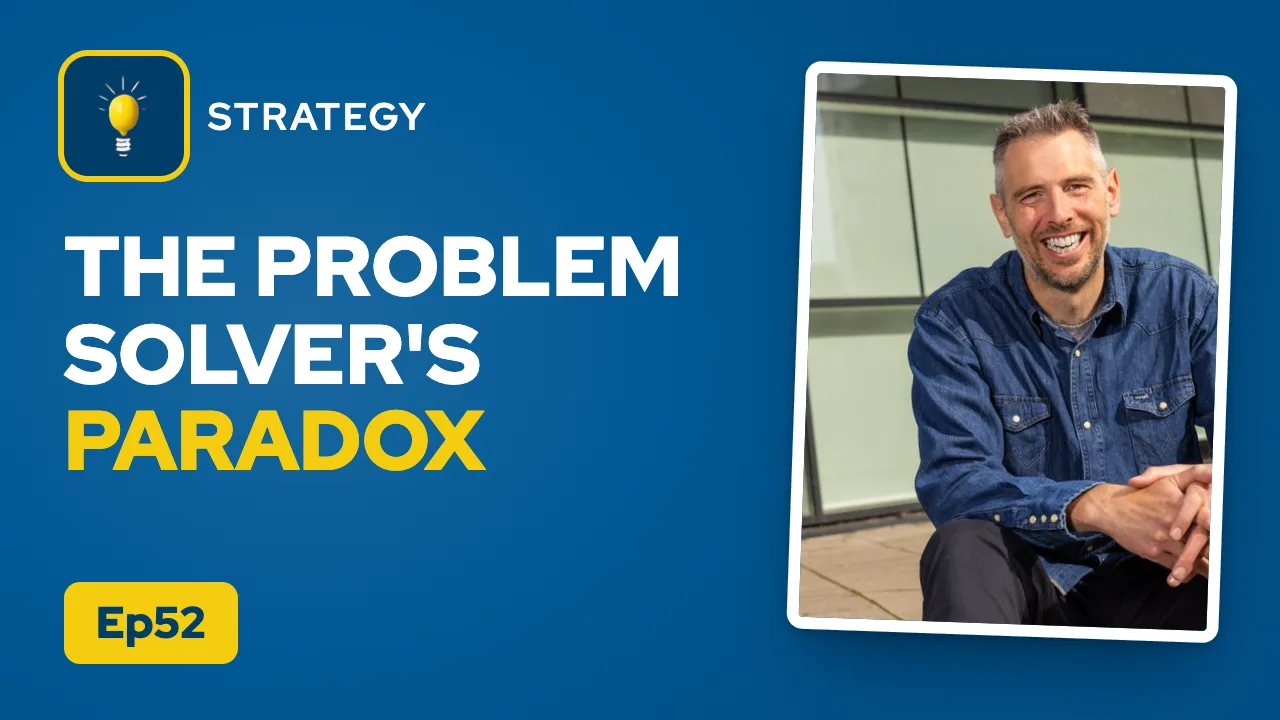
The more problems you can solve as an expert, the harder growth gets. The problem solver's paradox from LEMONADE Plan, and how to weigh depth against reach.
 Gareth Everson4 min read
One of the most frustrating things I've seen in 14 years of helping expert-led businesses is the gap between how well someone can solve their clients' or patients' problems and how well their business grows. They have years of expertise and great ways of helping people. Yet the recognition, credibility and profitability that should follow don't arrive.
In LEMONADE Plan I call this the problem solver's paradox. It's the reason your expertise might be the biggest barrier to growing your business.
The Problem Solver's Paradox
The more problems you can solve as an expert, the harder it becomes to focus on any one of them. That makes it harder to turn your work into a systematic way to grow your business.
In practice, it means delivering scattered and different solutions to each client or patient you take on. Solving the problems they face becomes almost a personal challenge.
The Expertise Trap
I describe this as the expertise trap. The longer you've trained to understand and solve the problems you do, the more problems you start to see in every client who comes into your world. The deeper your training, the more related problems you spot.
Because we're driven to find the right solution, we can end up down rabbit holes. We try to solve every problem that exists. Instead of moving into repeat mode and working with the next client, or the next batch of clients, we're left exhausted. We carry on working with clients whose challenge we've already solved 80 or 90% of, and our drive for perfection keeps us absorbed in that relationship rather than moving on to the next client or patient.
Custom Solutions Over Standard Ones
Over time, this pushes expertise towards creating custom solutions for every client, rather than standardised ones that could serve a much wider audience.
A Bigger Impact or a Wider One?
What would motivate you more: having a bigger impact on fewer people, or having an impact on more people? It's worth weighing up honestly. The answer shapes your delivery model and the offers you make to your clients.
If You'd Rather Go Deep
If you'd rather solve more of the problems that fewer clients have, within the time you have and without exhausting yourself, that's a perfectly good path. Do check whether you're being paid what that expertise deserves, though. Are you undercharging for the depth you bring to a small number of clients?
If You'd Rather Help More People
If you've thought it through and feel you're helping too few people, look at it from a Pareto, or 80/20, perspective. Which 20 or 30% of what's possible would solve 80 or 90% of the challenges your clients have? That's the place to start if you want to help far more people with the expertise you have.
“The more problems you can solve as an expert, the harder it becomes to focus on any one of them.”
There's No Right or Wrong Answer
Running your business for as long as you have means you're good at what you do, and people are happy to pay you to solve the problems they have. The question to take away is whether there's a more valuable way to deliver what you do to more people, without exhausting yourself. Could part of it become more systematic, scalable and repeatable, and easier to present to a wider audience?
Questions for You to Consider
- Would a bigger impact on fewer people, or an impact on more people, motivate you more?
- How many of your clients are you still working with after their main problem is 80 or 90% solved?
- Are you charging what your depth of expertise deserves?
- Which 20 or 30% of what you do solves 80 or 90% of your clients' challenges?
- Which parts of your delivery could become standard rather than custom?
- Does your client work leave you energised or exhausted?
Take Aways to Action
- Choose your model. Decide whether you want a bigger impact on fewer people or an impact on more people.
- Price for depth. If you go deep with fewer clients, check that you aren't undercharging.
- Find your 80/20. Identify the part of your work that solves most of your clients' challenges.
- Standardise what you can. Turn the repeatable parts of your expertise into a systematic, scalable offer.
- Know when to move on. Notice when the drive for perfection keeps you in a client relationship after the main problem is solved.
Timecodes
Time | Topic |
|---|---|
00:00 | Why some expert-led businesses don't grow |
01:01 | The problem solver's paradox |
02:04 | The more problems you can solve, the harder it is to focus |
02:34 | The expertise trap |
04:07 | Custom solutions over standard ones |
04:37 | A bigger impact or a wider one? |
05:09 | If you'd rather go deep: are you undercharging? |
05:41 | If you'd rather help more people: the 80/20 mix |
06:13 | There's no right or wrong answer |
Filed underStrategy