
Podcast · Ep42
How to Use Middle of Funnel (MOFU) Landing Pages
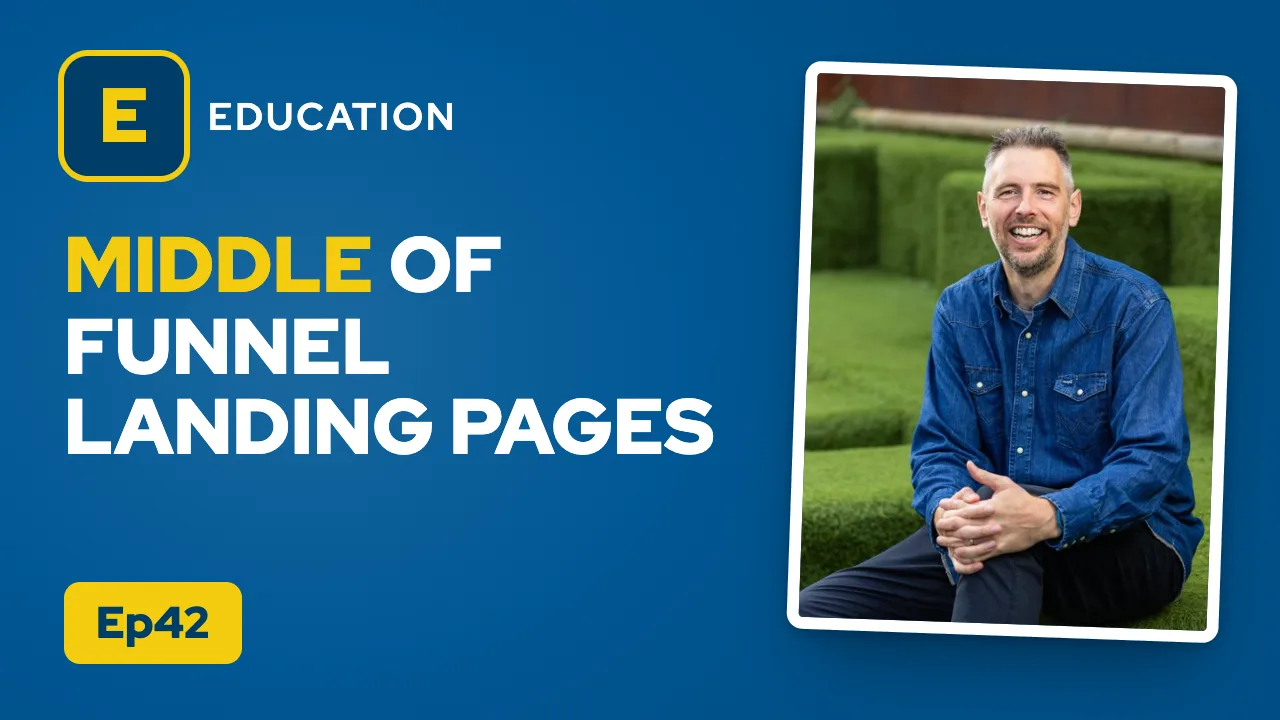
People in the middle of the funnel know their problem and want solutions. The two landing page types that suit them, how to look credible, and topic ideas.
 Gareth Everson9 min read
In episode 41 I talked about top of funnel landing pages, and the structure, content and messaging that suit people at that stage. Top of funnel, if you remember, is for people who are aware of a problem but don't know how to address it.
Middle of funnel is for people who know they've got the problem. They've diagnosed it themselves, or been helped to diagnose it, whether it's an issue in their business or in their personal life, and now they're starting to look for solutions. They're solution seekers.
This episode in the landing pages mini-series is about them. A middle of funnel landing page gives them more insights, so they can recognise the solution they need. I'll cover the two page types that work best here, how to show you're credible, and topic ideas from two books I like a lot.
Two Landing Page Types for Solution Seekers
The Infomercial-Style Page
The first is what I described earlier in the series, in the 11 types of landing pages, as the infomercial-style landing page. It feels like a blog post, with plenty of rich content, insights and detail that help your visitor do their own research and see where they should go for a solution.
The difference from a blog page is the clutter you keep away. Menus are kept to a minimum, ideally lower down the page, and there's no distracting messaging down the right-hand column tempting them away to other posts. You want them to read your content, and for it to lead them logically into opting in for more detail about the problem you've just helped them diagnose and the solutions that exist for it.
The Survey or Quiz Page
The other popular type is the survey or quiz-style landing page. Tools like ScoreApp and other quiz funnels have made it much more common, and it suits middle of funnel people well.
Someone at top of funnel, early in their investigation, probably doesn't want to put much effort into getting a guide. Once they're seeking solutions, they're far more willing to tell you about the problem they face. A quiz or scorecard asks them a series of questions that profile that problem and show them where they're at and what solution to look for.
They do have to give you their details and answer a lot of questions. In return, they can expect specific guidance on where they're at and how they can solve the problem, so be clear about that on the landing page.
Show That You're a Credible Source
At middle of funnel, you're helping someone get clearer in their mind about how to solve their problem. You share your expertise and insights, and you show that you're a credible source of that information.
Reviews on the landing page help, and so do your accreditations. If you've published a book, mention it, and the same goes for your YouTube channel or anything else that puts you on that pedestal as the expert. It all builds a picture of you as a trustworthy source who can help. So when you ask for their opt-in, or for the time it takes to read your materials, there's less resistance.
Marcus Sheridan's Big Five
Two fantastic books relate to middle and bottom of funnel situations. The first is They Ask, You Answer by Marcus Sheridan, whom I've talked about many times on this podcast. He doesn't present his Big Five as middle or bottom of funnel topics, but in my mind they speak to people at exactly those stages.
Cost and Problems
The first of the Big Five is cost: how much a solution is likely to cost, broken down across all the different options available.
The second is problems, meaning what can go wrong when someone sets out to solve the problem they've got. That content builds trust, because it admits there are challenges with whatever problem someone has.
Comparisons and Reviews
The third is comparisons. Why is this solution better than that one, and why pay more for these features or benefits than you would by going low market? Comparing the solutions out there honestly and transparently, even talking about your competitors, is a good way to build middle of funnel authority. You can then offer downloadable guides that help people see the difference between the options.
The fourth is reviews. You might compare the options by their public reviews online, or create your own review-based structure of how you see the market. That openness helps your audience trust you to help them choose the right option for themselves.
Best in Class
The fifth is what he calls best in class. It's for people who only want the very best option, and it shows them what that looks like, why it looks that way and how they can buy it.
All five relate to the buying process, at a level of detail that needs someone to be at middle of funnel before they'll invest the time. Keep them in mind when you choose topics for your middle of funnel landing pages.
Five Ideas From Content Fortress
The other book I like in this area is Content Fortress by Martin Huntbach and Lindsay Cambridge, friends of mine from my content marketing days. We were in a group together after they launched their business, Jammy Digital. To position themselves as the higher-value source of content marketing in their marketplace, they wrote Content Fortress from what they'd learned, showing their audience how to position themselves as high-value businesses too.
It's a wonderful read, a couple of hundred pages you can easily get through over a weekend. Its five main themes for creating content appeal to middle and bottom of funnel buyers as well.
Transparency
The first is transparency, showing the ins and outs of how you provide your solution, why it looks the way it does and how you work with clients. Day-in-the-life content builds trust and honesty with the people who see it, and you can follow it with buyer's guides and checklists to download.
Values-Led Content
The second is values. Values-led messaging helps readers see for themselves that their values match yours. It calls out things you don't like in your industry, or common misconceptions, and it's upfront and honest. Your suppliers might not like you talking about these things, but it builds rapport and trust with your target clients.
On a landing page, that can become a downloadable guide that calls out some of the poorer practices. In one episode I had a bingo card of things people say in the CRM space. It was my slightly silly way of calling out poor behaviour when people recommend a CRM, and it fits this kind of content.
Repelling Content
The third is what they call repelling content. It creates a moat around your business that says which types of business or people you don't want to work with, and why, and how you operate instead.
You can build downloadable guides, buyer's guides or cost calculator spreadsheets around it too. In Content Fortress, Martin and Lindsay give the example of their own business, where they explain why they don't want to underprice what they do. They framed a cost-based piece to repel the wrong types of client.
Repelling content attracts interest because it's quirky and honest, and different to what most people put online. Once it's drawn people in, by entertaining them or shining a light on practices in an industry, you can offer an alternative, and that becomes the downloadable guide. We work this way, we encourage you to buy this way, so leave your details to download the buyer's guide. It can even be a download you use elsewhere, framed slightly differently.
Expectation Setting
The fourth is process-oriented content, which they call expectation setting. It sets out the structure of a project or an engagement with you, whether you run a patient-led business, an agency or another service business. It helps the person opting in get clear in their mind what working with you will be like.
This is great for landing page opt-ins. A step-by-step guide or a clear picture of going from point A to point B to point C helps them see what they need to think about. It also makes them a better buyer from you, because once they've seen a great process for solving their problem, they're likely to trust the people who showed them it more than anyone else.
The download might be a process guide, a step-by-step blueprint, a project plan or a Notion template. I'm a big fan of keeping it simple, so mine are often a Google Doc or a simple Canva checklist. I don't use elaborate design, but a theme runs through all of them on my site: my brand colours, what my brand stands for, and a common look and templated structure.
Your Personality and Tone
The final theme is making sure your personality and tone come across in everything you create, whether that's blog posts or landing pages. How quickly can someone reading it tell that it could only be you? It comes from your fonts, your colours and the sense of humour in what you write, and it builds brand awareness, loyalty and recognition.
Start With One or Two Pages
I don't want you to feel bombarded by all these ideas, and I'd like this to be a trigger instead. Can you find one or two things that might have been a blog post but would be better as a landing page?
Use the infomercial-style setting, where you build trust and knowledge for the problem-aware person about the solutions that exist. Take away the clutter that would normally sit around a blog post, and draw them towards the opt-in, whether that's a checklist, a buyer's guide or a process document.
“Having one or two good middle of funnel landing pages gives you somewhere to point a person who is at that stage.”
Because you know they're middle of funnel when they opt in, you know what your follow-up content needs to be to take them on to the next stage, bottom of funnel.
Questions for You to Consider
- Which of your blog posts speak to solution seekers, and could one become an infomercial-style landing page?
- Would a quiz or scorecard help your solution seekers see where they're at?
- What does your landing page show to prove you're a credible source?
- Which of Marcus Sheridan's Big Five topics have you not yet written about?
- What would a repelling piece of content say about the clients you don't want to work with?
- Could you turn the way you work with clients into a step-by-step guide or project plan?
- Would someone who reads your downloads know they could only have come from you?
Take Aways to Action
- Turn a post into a page. Take one blog post that suits solution seekers, remove the clutter and lead it into an opt-in.
- Try a quiz. Consider a scorecard or quiz page, and tell people what tailored guidance they'll get back.
- Show your credibility. Add reviews, accreditations, your book or your YouTube channel to the page.
- Use the Big Five. Plan topics around cost, problems, comparisons, reviews and best in class.
- Set expectations. Offer a simple process guide, checklist or project plan that shows what working with you looks like.
- Keep your brand consistent. Use the same colours, fonts, tone and templated structure across your downloads.
Timecodes
Time | Topic |
|---|---|
00:00 | Continuing from top of funnel landing pages |
00:31 | Who middle of funnel visitors are |
01:34 | The infomercial-style landing page |
02:35 | The survey or quiz-style landing page |
04:36 | Showing you're a credible source |
06:09 | Marcus Sheridan's Big Five from They Ask, You Answer |
08:42 | Best in class |
09:49 | Content Fortress by Martin Huntbach and Lindsay Cambridge |
10:53 | Transparency |
11:25 | Values-led content and the CRM bingo card |
12:59 | Repelling content |
15:05 | Expectation-setting content |
16:37 | Keeping your downloads simple |
17:37 | Your personality and tone |
18:38 | Start with one or two landing pages |
20:11 | Next: bottom of funnel |
Filed underEducation